
From A Fifteenth-Century School Book, c. 1500 As soon as I am come into the school, this fellow goes to make water and he goes out to the common draft. Some after another asks if he may go drink. Another calls upon me that he may go home. These and other such lies my schoolboys give for excuse that they may be out of the way.
(source: Internet History Sourcebooks Project)
Category Archives: Quotables
We do what we can, but so do they….
In less than a year, he apologized. He understood my career choice. His daughter had come home for the holidays, transformed. The vibrant, joyful Christian girl who’d left for school had returned sullen and depressed. She hated her family’s values, she resented her parents, and she was obviously drinking too much. The school had stripped down her value system — all in the name of “critical thinking” — and replaced it with angry groupthink. Life and hope were replaced with fear and loathing. A social-justice warrior was born.
(source: Higher-Education Reform)

Keep Riding Forth

Hwær cwom mearg? Hwær cwom mago? Hwær cwom maþþumgyfa?
Hwær cwom symbla gesetu? Hwær sindon seledreamas?
Eala beorht bune! Eala byrnwiga!
Eala þeodnes þrym! Hu seo þrag gewat,
genap under nihthelm, swa heo no wære.
Stondeð nu on laste leofre duguþe
weal wundrum heah, wyrmlicum fah.
Eorlas fornoman asca þryþe,
wæpen wælgifru, wyrd seo mære,
ond þas stanhleoþu stormas cnyssað,
hrið hreosende hrusan bindeð,
wintres woma, þonne won cymeð,
nipeð nihtscua, norþan onsendeð
hreo hæglfare hæleþum on andan.
Eall is earfoðlic eorþan rice,
onwendeð wyrda gesceaft weoruld under heofonum.
Her bið feoh læne, her bið freond læne,
her bið mon læne, her bið mæg læne,
eal þis eorþan gesteal idel weorþeð!
Swa cwæð snottor on mode, gesæt him sundor æt rune.
Til biþ se þe his treowe gehealdeþ, ne sceal næfre his torn to rycene
beorn of his breostum acyþan, nemþe he ær þa bote cunne,
eorl mid elne gefremman. Wel bið þam þe him are seceð,
frofre to Fæder on heofonum, þær us eal seo fæstnung stondeð.(source: Anglo-Saxons.net : The Wanderer)
So spake the wise man in his mind,
where he sat apart in counsel.
Good is he who keeps his faith,
And a warrior must never speak
his grief of his breast too quickly,
unless he already knows the remedy –
a hero must act with courage.
It is better for the one that seeks mercy,
consolation from the father in the heavens,
where, for us, all permanence rests.
If you love life, if you love beauty, if you love truth and goodness, you must love Jesus Christ. You must love Christianity, the faith of Jesus Christ. You must love the Church that Jesus Christ founded. You must love the People that Jesus adds to that Church. You must love the teachings and the wisdom of that Church, the Spirit’s fulfilling of the Promise of Christ and the unfolding of the Word given to the prophets and apostles. You must love the saints, living and dead, struggling and suffering and blissful.
And you must keep loving truth, keep loving beauty, keep loving goodness, even if you are called “fundamentalist” by hirelings and “bigot” by wolves, for there is no way to love sinners except by taking on the wounds of Christ, that is, the reproaches of the self-saving and the self-hating, and showing the truth as true, the beautiful as lovely, and the good as worth the hassle.
(posted on Facebook first)

Apostolate of the Laity (Part Two)
The whole Church must work vigorously in order that men may become capable of rectifying the distortion of the temporal order and directing it to God through Christ. Pastors must clearly state the principles concerning the purpose of creation and the use of temporal things and must offer the moral and spiritual aids by which the temporal order may be renewed in Christ. The laity must take up the renewal of the temporal order as their own special obligation. Led by the light of the Gospel and the mind of the Church and motivated by Christian charity, they must act directly and in a definite way in the temporal sphere. As citizens they must cooperate with other citizens with their own particular skill and on their own responsibility. Everywhere and in all things they must seek the justice of God’s kingdom.
(source: Apostolicam actuositatem)
The parish offers an obvious example of the apostolate on the community level inasmuch as it brings together the many human differences within its boundaries and merges them into the universality of the Church.(1) The laity should accustom themselves to working in the parish in union with their priests,(2) bringing to the Church community their own and the world’s problems as well as questions concerning human salvation, all of which they should examine and resolve by deliberating in common. As far as possible the laity ought to provide helpful collaboration for every apostolic and missionary undertaking sponsored by their local parish. They should develop an ever-increasing appreciation of their own diocese, of which the parish is a kind of cell, ever ready at their pastor’s invitation to participate in diocesan projects.
(source: Apostolicam actuositatem)
11. Since the Creator of all things has established conjugal society as the beginning and basis of human society and, by His grace, has made it a great mystery in Christ and the Church (cf. Eph. 5:32), the apostolate of married persons and families is of unique importance for the Church and civil society. Christian husbands and wives are cooperators in grace and witnesses of faith for each other, their children, and all others in their household. They are the first to communicate the faith to their children and to educate them by word and example for the Christian and apostolic life. They prudently help them in the choice of their vocation and carefully promote any sacred vocation which they may discern in them. It has always been the duty of Christian married partners but today it is the greatest part of their apostolate to manifest and prove by their own way of life the indissolubility and sacredness of the marriage bond, strenuously to affirm the right and duty of parents and guardians to educate children in a Christian manner, and to defend the dignity and lawful autonomy of the family. They and the rest of the faithful, therefore, should cooperate with men of good will to ensure the preservation of these rights in civil legislation and to make sure that governments give due attention to the needs of the family regarding housing, the education of children, working conditions, social security, and taxes; and that in policy decisions affecting migrants their right to live together as a family should be safeguarded.
(source: Apostolicam actuositatem)
13. The apostolate in the social milieu, that is, the effort to infuse a Christian spirit into the mentality, customs, laws, and structures of the community in which one lives, is so much the duty and responsibility of the laity that it can never be performed properly by others. In this area the laity can exercise the apostolate of like toward like. It is here that they complement the testimony of life with the testimony of the word.(9) It is here where they work or practice their profession or study or reside or spend their leisure time or have their companionship that they are more capable of helping their brethren.
(source: Apostolicam actuositatem)
22. Deserving of special honor and commendation in the Church are those lay people, single or married, who devote themselves with professional experience, either permanently or temporarily, to the service of associations and their activities. There is a source of great joy for the Church in the fact that there is a daily increase in the number of lay persons who offer their personal service to apostolic associations and activities, either within the limits of their own nation or in the international field or especially in Catholic mission communities and in regions where the Church has only recently been implanted.
(source: Apostolicam actuositatem)
No project, however, may claim the name “Catholic” unless it has obtained the consent of the lawful Church authority.
(source: Apostolicam actuositatem)
30. The training for the apostolate should start with the children’s earliest education. In a special way, however, adolescents and young persons should be initiated into the apostolate and imbued with its spirit. This formation must be perfected throughout their whole life in keeping with the demands of new responsibilities. It is evident, therefore, that those who have the obligation to provide a Christian education also have the duty of providing formation for the apostolate. In the family parents have the task of training their children from childhood on to recognize God’s love for all men. By example especially they should teach them little by little to be solicitous for the material and spiritual needs of their neighbor. The whole family in its common life, then, should be a sort of apprenticeship for the apostolate. Children must be educated, too, in such fashion that transcending the family circle, they may open their minds to both ecclesiastical and temporal communities. They should be so involved in the local community of the parish that they will acquire a consciousness of being living and active members of the people of God. Priests should focus their attention on the formation of the laity for the apostolate in their catechetics, their ministry of the word, their direction of souls, and in their other pastoral services. Schools, colleges, and other Catholic educational institutions also have the duty to develop a Catholic sense and apostolic activity in young persons. If young people lack this formation either because they do not attend these schools or because of any other reason, all the more should parents, pastors of souls, and apostolic organizations attend to it. Teachers and educators on the other hand, who carry on a distinguished form of the apostolate of the laity by their vocation and office, should be equipped with that learning and pedagogical skill that are needed for imparting such education effectively.
(source: Apostolicam actuositatem)
Apostolate of the Laity (Part One)
Indeed, the organic union in this body and the structure of the members are so compact that the member who fails to make his proper contribution to the development of the Church must be said to be useful neither to the Church nor to himself.
(source: Apostolicam actuositatem)
They exercise the apostolate in fact by their activity directed to the evangelization and sanctification of men and to the penetrating and perfecting of the temporal order through the spirit of the Gospel. In this way, their temporal activity openly bears witness to Christ and promotes the salvation of men. Since the laity, in accordance with their state of life, live in the midst of the world and its concerns, they are called by God to exercise their apostolate in the world like leaven, with the ardor of the spirit of Christ.
(source: Apostolicam actuositatem)
4. Since Christ, sent by the Father, is the source and origin of the whole apostolate of the Church, the success of the lay apostolate depends upon the laity’s living union with Christ, in keeping with the Lord’s words, “He who abides in me, and I in him, bears much fruit, for without me you can do nothing” (John 15:5). This life of intimate union with Christ in the Church is nourished by spiritual aids which are common to all the faithful, especially active participation in the sacred liturgy.(5) These are to be used by the laity in such a way that while correctly fulfilling their secular duties in the ordinary conditions of life, they do not separate union with Christ from their life but rather performing their work according to God’s will they grow in that union. In this way the laity must make progress in holiness in a happy and ready spirit, trying prudently and patiently to overcome difficulties.(6) Neither family concerns nor other secular affairs should be irrelevant to their spiritual life, in keeping with the words of the Apostle, “What-ever you do in word or work, do all in the name of the Lord Jesus Christ, giving thanks to God the Father through Him” (Col. 3:17).
(source: Apostolicam actuositatem)
They who have this faith live in the hope of the revelation of the sons of God and keep in mind the cross and resurrection of the Lord. In the pilgrimage of this life, hidden with Christ in God and free from enslavement to wealth, they aspire to those riches which remain forever and generously dedicate themselves wholly to the advancement of the kingdom of God and to the reform and improvement of the temporal order in a Christian spirit. Among the trials of this life they find strength in hope, convinced that “the sufferings of the present time are not worthy to be compared with the glory to come that will be revealed in us” (Rom. 8:18).
(source: Apostolicam actuositatem)
This plan for the spiritual life of the laity should take its particular character from their married or family state or their single or widowed state, from their state of health, and from their professional and social activity. They should not cease to develop earnestly the qualities and talents bestowed on them in accord with these conditions of life, and they should make use of the gifts which they have received from the Holy Spirit.
Furthermore, the laity who have followed their vocation and have become members of one of the associations or institutes approved by the Church try faithfully to adopt the special characteristics of the spiritual life which are proper to them as well. They should also hold in high esteem professional skill, family and civic spirit, and the virtues relating to social customs, namely, honesty, justice, sincerity, kindness, and courage, without which no true Christian life can exist.
(source: Apostolicam actuositatem)
5. Christ’s redemptive work, while essentially concerned with the salvation of men, includes also the renewal of the whole temporal order. Hence the mission of the Church is not only to bring the message and grace of Christ to men but also to penetrate and perfect the temporal order with the spirit of the Gospel. In fulfilling this mission of the Church, the Christian laity exercise their apostolate both in the Church and in the world, in both the spiritual and the temporal orders. These orders, although distinct, are so connected in the singular plan of God that He Himself intends to raise up the whole world again in Christ and to make it a new creation, initially on earth and completely on the last day. In both orders the layman, being simultaneously a believer and a citizen, should be continuously led by the same Christian conscience.
(source: Apostolicam actuositatem)
However, an apostolate of this kind does not consist only in the witness of one’s way of life; a true apostle looks for opportunities to announce Christ by words addressed either to non-believers with a view to leading them to faith, or to the faithful with a view to instructing, strengthening, and encouraging them to a more fervent life. “For the charity of Christ impels us” (2 Cor. 5:14). The words of the Apostle should echo in all hearts, “Woe to me if I do not preach the Gospel” (1 Cor. 9:16).(1) Since, in our own times, new problems are arising and very serious errors are circulating which tend to undermine the foundations of religion, the moral order, and human society itself, this sacred synod earnestly exhorts laymen-each according to his own gifts of intelligence and learning-to be more diligent in doing what they can to explain, defend, and properly apply Christian principles to the problems of our era in accordance with the mind of the Church.
(source: Apostolicam actuositatem)
All Christians Believe in Infallibility
Here, friends, is the evidence that every Biblicist Christian is also bound to believe in the infallibility of the Church:
Therefore God sends upon them a strong delusion, to make them believe what is false, so that all may be condemned who did not believe the truth but had pleasure in unrighteousness.
But we are bound to give thanks to God always for you, brethren beloved by the Lord, because God chose you from the beginning to be saved, through sanctification by the Spirit and belief in the truth. To this he called you through our gospel, so that you may obtain the glory of our Lord Jesus Christ. So then, brethren, stand firm and hold to the traditions which you were taught by us, either by word of mouth or by letter.
(source: 2 Thessalonians 2 RSVCE)
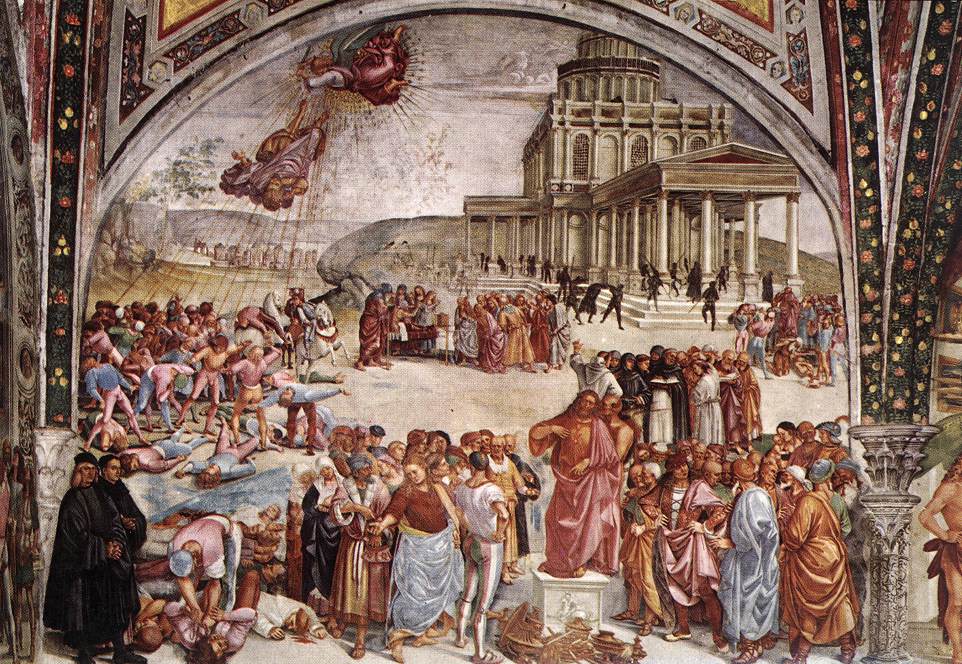
And if those days had not been shortened, no human being would be saved; but for the sake of the elect those days will be shortened. Then if any one says to you, ‘Lo, here is the Christ!’ or ‘There he is!’ do not believe it. For false Christs and false prophets will arise and show great signs and wonders, so as to lead astray, if possible, even the elect. Lo, I have told you beforehand. So, if they say to you, ‘Lo, he is in the wilderness,’ do not go out; if they say, ‘Lo, he is in the inner rooms,’ do not believe it. For as the lightning comes from the east and shines as far as the west, so will be the coming of the Son of man. Wherever the body is, there the eagles will be gathered together.
(source: Matthew 24 RSVCE)
There is a natural and final inevitability: whatever the intermediate-term complications may be, in the end the Body of Christ, in several senses, is a definitive and unfailing unity. Everyone who believes that Christ Himself, and the recorded witness to Christ in the Scriptures, speaks truly, must believe that it is not “possible” for even the most extreme deception possible “to lead astray…the elect.”
Whatever Catholics believe about Apostolic Succession, about the principle Ubi episcopus ibi ecclesia, about the infallibility of ratified ecumenical Councils, about the infallibility of the ex cathedra decrees of the Pope, or about the infallibility of the sensus fidelium fidei, these sources of dogma all have their solid foundation in the authority of Christ, who warrants that the Church will not finally be apart from Christ:
He said to them, “But who do you say that I am?” Simon Peter replied, “You are the Christ, the Son of the living God.” And Jesus answered him, “Blessed are you, Simon Bar-Jona! For flesh and blood has not revealed this to you, but my Father who is in heaven. And I tell you, you are Peter, and on this rock I will build my church, and the powers of death shall not prevail against it. I will give you the keys of the kingdom of heaven, and whatever you bind on earth shall be bound in heaven, and whatever you loose on earth shall be loosed in heaven.”
(source: Matthew 16 RSVCE)
For I am sure that neither death, nor life, nor angels, nor principalities, nor things present, nor things to come, nor powers, nor height, nor depth, nor anything else in all creation, will be able to separate us from the love of God in Christ Jesus our Lord.
(source: Romans 8 RSVCE)
More Domini Canes, Please!
As a rule, I don’t go to the lapsed for my understanding of things Catholic, but in this case Rod Dreher has done yeoman’s work on the matter of the anti-Christian sentiments rife in much upper academia, including theological academia, and prominently including the doctoral programs of certain prominent Jesuit schools. A case in point was one signatory of the recent, risible, even cute in its precious pique, letter attempting to silence Ross Douthat (who I only agree with when he’s right, so to speak):
She offered in public, for the public’s consideration (which is why you upload something to Academia.edu), a paper about reading Thomas Aquinas through the lens of gender theorist Judith Butler, and concluding that the Magisterium (the teaching authority of the Catholic Church) has misunderstood the medieval theologian, who actually would have considered homosexual acts to be morally licit. She posted a paper in which she lauds gangsta rapper Tupac Shakur as a “theologian.” And she posted a paper in which she contends that the Eucharist and Baptism, the two central sacraments of the Catholic faith, are fatally compromised by white supremacy, and that the Catholic Church can only find redemption if it begins lobbying the government to force white people to leave their homes.
(source: Why Study Academic Theology? | The American Conservative)
Later, he quotes extensively from his further correspondences with some theologians one might call orthodox, who refer to Benedict XVI’s account of the pulpit in the Cathedral at Troia, with its image of the faithful hound trying to fight off the roaring lion who is seeking to devour the lamb–the lambs being the Church, which as Christ is always sacrificed (but never subject to the devil) and as His flock is always at risk from the devil (but protected by Christ and His under-shepherds). The faithful minister, and the faithful theologian, ought to be those sheepdogs.
Like the Order of Preachers, the Domini Canes of old, who are not incidentally the major contributors to the development of the modern university (and those among whom the Angelic Doctor was given to the world)–like those faithful hounds, we too must rise at the scent of lion’s musk and interpose ourselves before the faithful. And we pray and call out for the Lord to send stronger protectors, not only sheepdogs but shepherds and undershepherds, in obedience to whom we may pour ourselves out in proclamation and defense of “the faith once for all delivered to the saints.”

Anything else is infidelity, and should be plainly called so. At the highest level of authority possible, with as systematic an inquiry as possible, as transparently and as publicly as possible. Let the light shine.
quoth Pope Pius XI
Each individual marriage, inasmuch as it is a conjugal union of a particular man and woman, arises only from the free consent of each of the spouses; and this free act of the will, by which each party hands over and accepts those rights proper to the state of marriage, is so necessary to constitute true marriage that it cannot be supplied by any human power. This freedom, however, regards only the question whether the contracting parties really wish to enter upon matrimony or to marry this particular person; but the nature of matrimony is entirely independent of the free will of man, so that if one has once contracted matrimony he is thereby subject to its divinely made laws and its essential properties. For the Angelic Doctor, writing on conjugal honor and on the offspring which is the fruit of marriage, says: “These things are so contained in matrimony by the marriage pact itself that, if anything to the contrary were expressed in the consent which makes the marriage, it would not be a true marriage.”
The Body cannot exist for the skeleton–nor thrive without it
The “frame of reference” for the mission of the Catholic Church has never, ever been the Code of Canon Law, and no canon lawyer I know of has ever, ever claimed otherwise. The “frame of reference” for the Catholic Church has always been, and has only been, Christ the Lord. For the cardinal archbishop of a major Western capital to talk as if the Code of Canon Law, for so much as one second, ever fancied itself as the “frame of reference” for the Catholic Church—well, it confirms the stranglehold that antinomian attitudes have secured over ecclesiastical thought in the space of one lifetime, to the point that today, many in the highest circles of ecclesiastical leadership can scarcely even talk about canon law without caricaturing it. But if Wuerl avoids offering some of the more insulting depictions of canon law and canon lawyers being tossed around recently, he nevertheless sees canon law largely as an obstacle to the saving truths proclaimed by Jesus and he gives urbane cover to others who find certain Gospel truths, as enunciated in concise legal terminology, too inconvenient.
(source: Canon law has never been ‘the frame of reference’…)

I’ll just say this: canon law has always seen itself in service to the Church, huge tracts of canon law rest directly on biblical foundations and doctrinal assertions made by the Magisterium over the centuries, canon law is always in need of reform (just ask any canon lawyer), and finally, that some people railing against canon law need to ask themselves whether it is law they don’t like, or the truths such laws defend.
(source: Canon law has never been ‘the frame of reference’…, emphasis added)
St. Jude Thaddeus, ora pro nobis
But you must remember, beloved, the predictions of the apostles of our Lord Jesus Christ; they said to you, “In the last time there will be scoffers, following their own ungodly passions.” It is these who set up divisions, worldly people, devoid of the Spirit. But you, beloved, build yourselves up on your most holy faith; pray in the Holy Spirit; keep yourselves in the love of God; wait for the mercy of our Lord Jesus Christ unto eternal life. And convince some, who doubt; save some, by snatching them out of the fire; on some have mercy with fear, hating even the garment spotted by the flesh.
(source: Jude RSVCE – Salutation – Jude, a servant of Jesus – Bible Gateway)
No Respecter of Persons
Not enough attention has been drawn to how the liberal proposals at the Synod conflate righteousness and respectability, communion and “community.” The starkest statement of this conflation came on Monday, from Archbishop Mark Coleridge of Australia. In a Vatican press conference, Coleridge said: “A second marriage that is enduring and stable and loving and where there are children who are cared for is not the same as a couple skulking off to a hotel room for a wicked weekend.” For this reason, “just to say that every second marriage or second union whatever you want to call it is adulterous, is perhaps too sweeping.”
Coleridge has spoken with admirable candor throughout the synod, and his comments here bring the issue into sharp relief. Does the church oppose sin, or only sordidness? When a man abandons his wife, does it matter whether the other woman waits for him in a house or in a hotel room? Is adultery a sin committed only by the impulsive, the cash-strapped, the time-pressed? Or can it also be executed by men with ample capital and orderly habits?
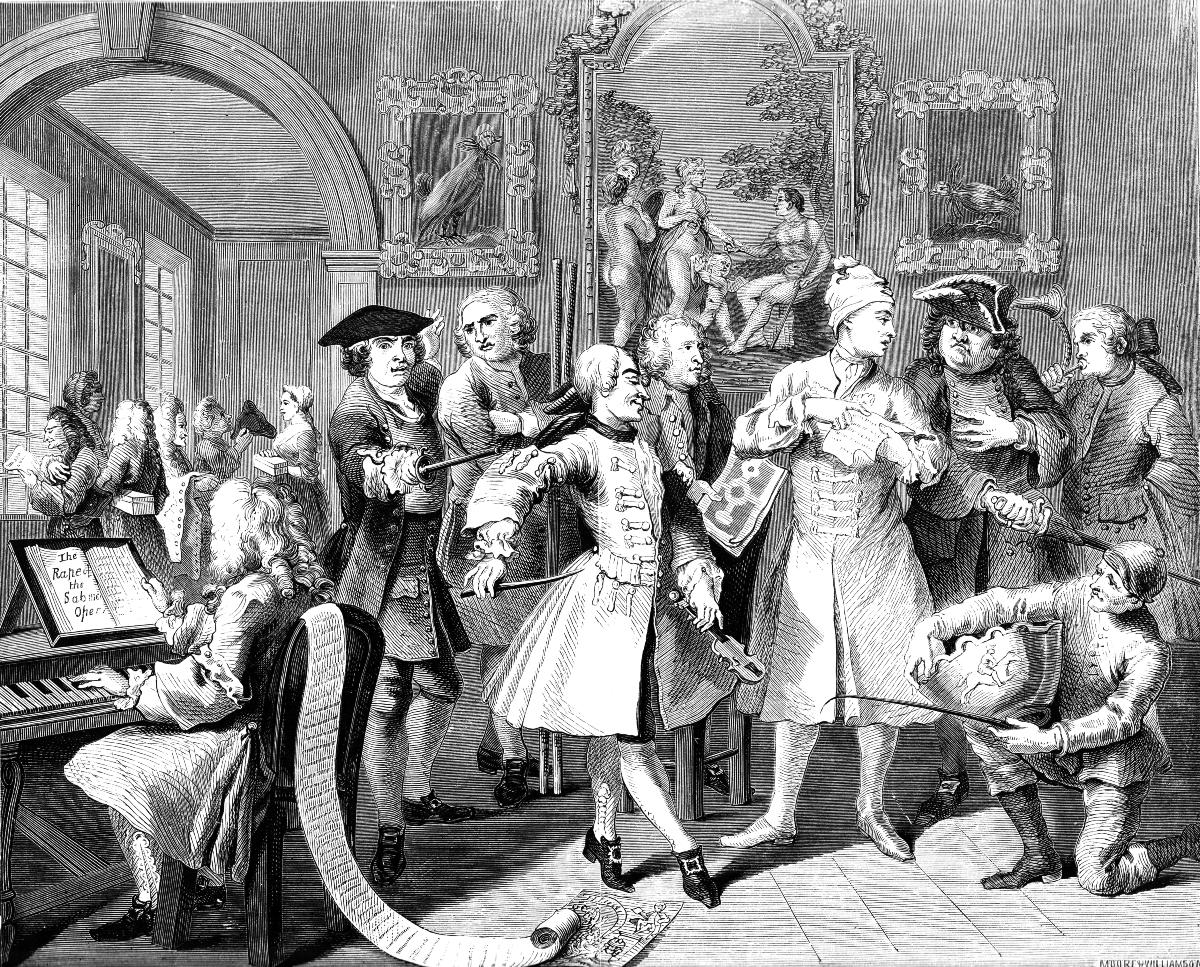
The Crowd Said, Crucify Him
As to the effectiveness of the language of Church teaching (“the language we speak is not communicating”), some distinctions need to be made. Communication is ineffective when the words are not understood by the listener. Communication is effective when the words are understood, even if the listener rejects the truth of the message. As regards the moral doctrine of the Church, the problem for many today is not unintelligibility, i.e, they cannot figure out what the Church teaches. Rather, that doctrine is understood quite well – and rejected.
That is not a failure to communicate, but rather a successful imparting of unwelcome knowledge. The Church’s mission is to call sinners to repentance, which starts with proclaiming the truths of the Gospel, however contrary they are to the lifestyle choices of those who hear that proclamation. Our absolute certainty in the truth of the Church’s doctrine and our belief in the efficacy of Divine grace teach us that the anger or sadness produced in a person being challenged to live according to God’s plan is salutary – and in many ways necessary.
(source: The Catholic Thing)

A Dynamic Corpse
Henry VIII was a Catholic in everything except that he was not a Catholic. He observed everything down to the last bead and candle; he accepted everything down to the last deduction from a definition; he accepted everything except Rome. And in that instant of refusal, his religion became a different religion; a different sort of religion; a different sort of thing. In that instant it began to change; and it has not stopped changing yet. We are all somewhat wearily aware that some Modern Churchmen call such continuous change progress; as when we remark that a corpse crawling with worms has an increased vitality; or that a snow-man, slowly turning into a puddle, is purifying itself of its accretions. But I am not concerned with this argument here. The point is that a dead man may look like a sleeping man a moment after he is dead; but decomposition has actually begun. The point is that the snowman may in theory be made in the real image of man. Michelangelo made a statue in snow; and it might quite easily have been an exact replica of one of his statues in marble; but it was not in marble.
(source: “The Surrender upon Sex”: G.K Chesterton)
Archbishop Chaput, Ladies and Gentlemen!
The first example is the word inclusive. We’ve heard many times that the Church should be inclusive. And if by “inclusive” we mean a Church that is patient and humble, merciful and welcoming – then all of us here will agree. But it’s very hard to include those who do not wish to be included, or insist on being included on their own terms. To put it another way: I can invite someone into my home, and I can make my home as warm and hospitable as possible. But the person outside my door must still choose to enter. If I rebuild my house to the blueprint of the visitor or stranger, my family will bear the cost, and my home will no longer be their home. The lesson is simple. We need to be a welcoming Church that offers refuge to anyone honestly seeking God. But we need to remain a Church committed to the Word of God, faithful to the wisdom of the Christian tradition, and preaching the truth of Jesus Christ.
The second example is the expression unity in diversity. The Church is “catholic” or universal. We need to honor the many differences in personality and culture that exist among the faithful. But we live in a time of intense global change, confusion and unrest. Our most urgent need is unity, and our greatest danger is fragmentation. Brothers, we need to be very cautious in devolving important disciplinary and doctrinal issues to national and regional episcopal conferences – especially when pressure in that direction is accompanied by an implicit spirit of self-assertion and resistance.
(source: Creative Minority Report)

Dry Mouths
When an entire continent that is—to repeat—healthier, wealthier, and more secure than ever before ceases to produce the human future in the most elemental sense of “human future”—by refusing to have children—something is seriously awry. Something has gone dry in the soul. Whatever the economic , ideological, and cultural pressures involved, a lack of generosity toward the future is manifesting itself in willful barrenness. And that is, in the broad sense of the term “human spirit,” a spiritual problem. Indeed it is a spiritual crisis.
(source: Letter Number Ten | Xavier Rynne II, ed. | First Things)
